
Will Your Stuff Fit? A Storage Check Before You Move In
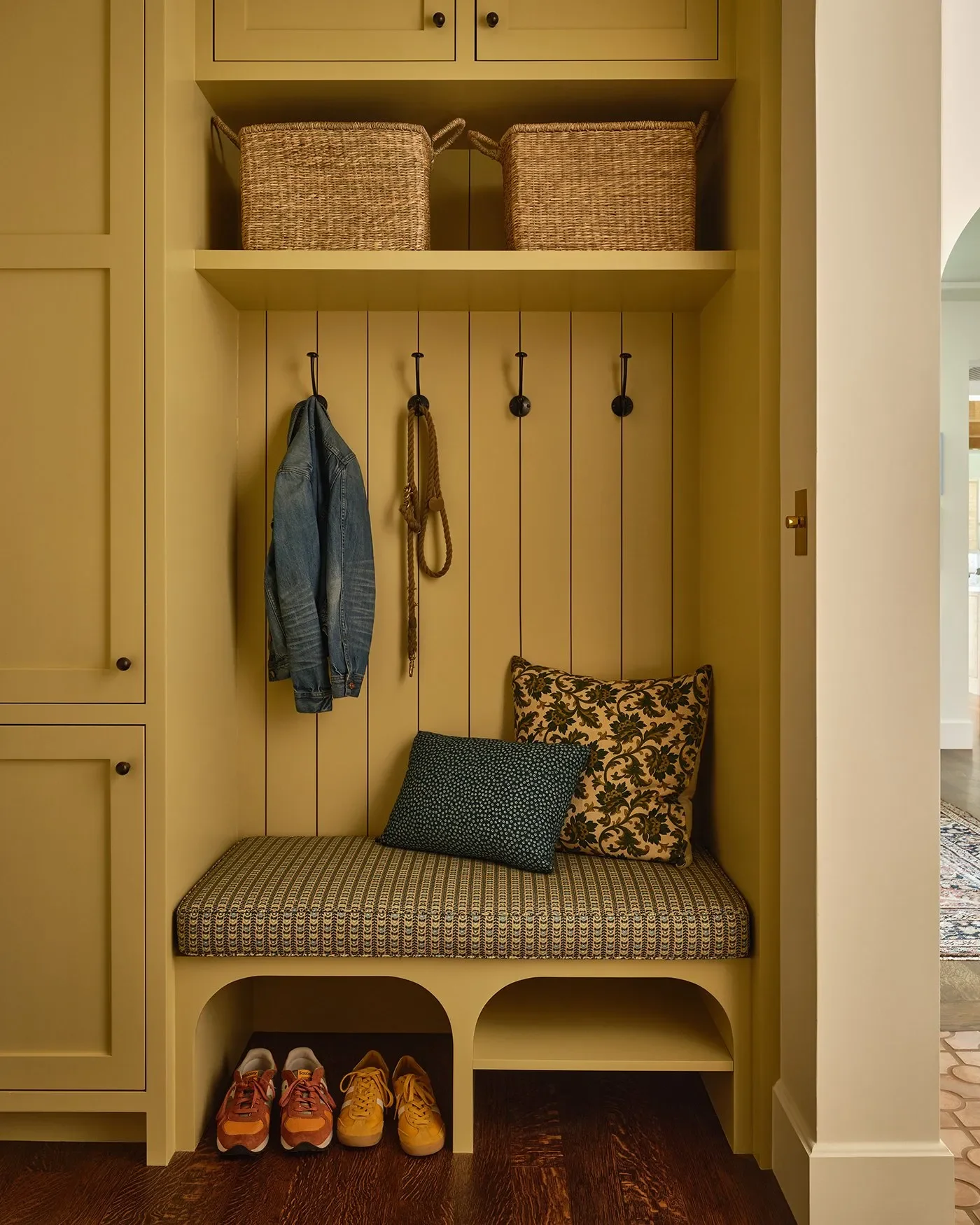
Yellow entryway storage with baskets, hooks, a bench and shoes in Space Camp's Culver City New Build.
An empty house is full of possibility. It is also very good at making you think you have more storage than you do.
Look at all those cabinets! The shelves! That enormous closet! Then you move in, and somehow the sheet pans have no home and your shoes are lined up along the bedroom wall.
Before you buy a cart full of bins, take a little time to match the new space to the things you actually use. This is one of our favorite parts of organizing: figuring out how a home can work for the people who live there.
Start with your belongings, not the empty shelves
It's tempting to look at a closet and decide it's big enough. But “big enough” depends on what needs to go inside it.
Start by editing and taking inventory, category by category. For clothes, that means looking at shoes, long hanging items, short hanging items and folded pieces separately. For a kitchen, look at the things you use together: everyday dishes, cooking tools, baking supplies, food storage and serving pieces.
You don't need a spreadsheet of every spoon. You do need a realistic picture of what you're keeping and how much space each category needs.
This is why we prefer to see both homes before a move. Your current setup shows us where things are squeezed in, what you can't reach and which categories keep spilling into other rooms. That's the information we want to carry forward. The frustrating storage arrangement can stay behind.
Measure the space you can actually use
The outside dimensions of a cabinet won't tell you whether your favorite roasting pan fits inside it. You need the usable interior space, plus room to get the item in and out comfortably.
Open the doors. Pull out the drawers. Notice hinges, plumbing, fixed shelves and any other little surprises. Look at the height between shelves as well as the width and depth. A basket that technically fits but catches every time you pull it out is going to get old very quickly.
A few useful things to check:
Kitchen: Where will cutting boards, sheet pans, tall bottles and countertop appliances live?
Closets: Is there enough hanging room for the clothes you actually wear, and a workable place for shoes?
Bathrooms: What storage remains once you account for the pipes and everyday toiletries?
Laundry and entryways: Where will hampers, cleaning tools, bags and shoes land?
Take photos and measurements before shopping. And check what you already have. A good basket doesn't need to be replaced just because you've changed addresses.
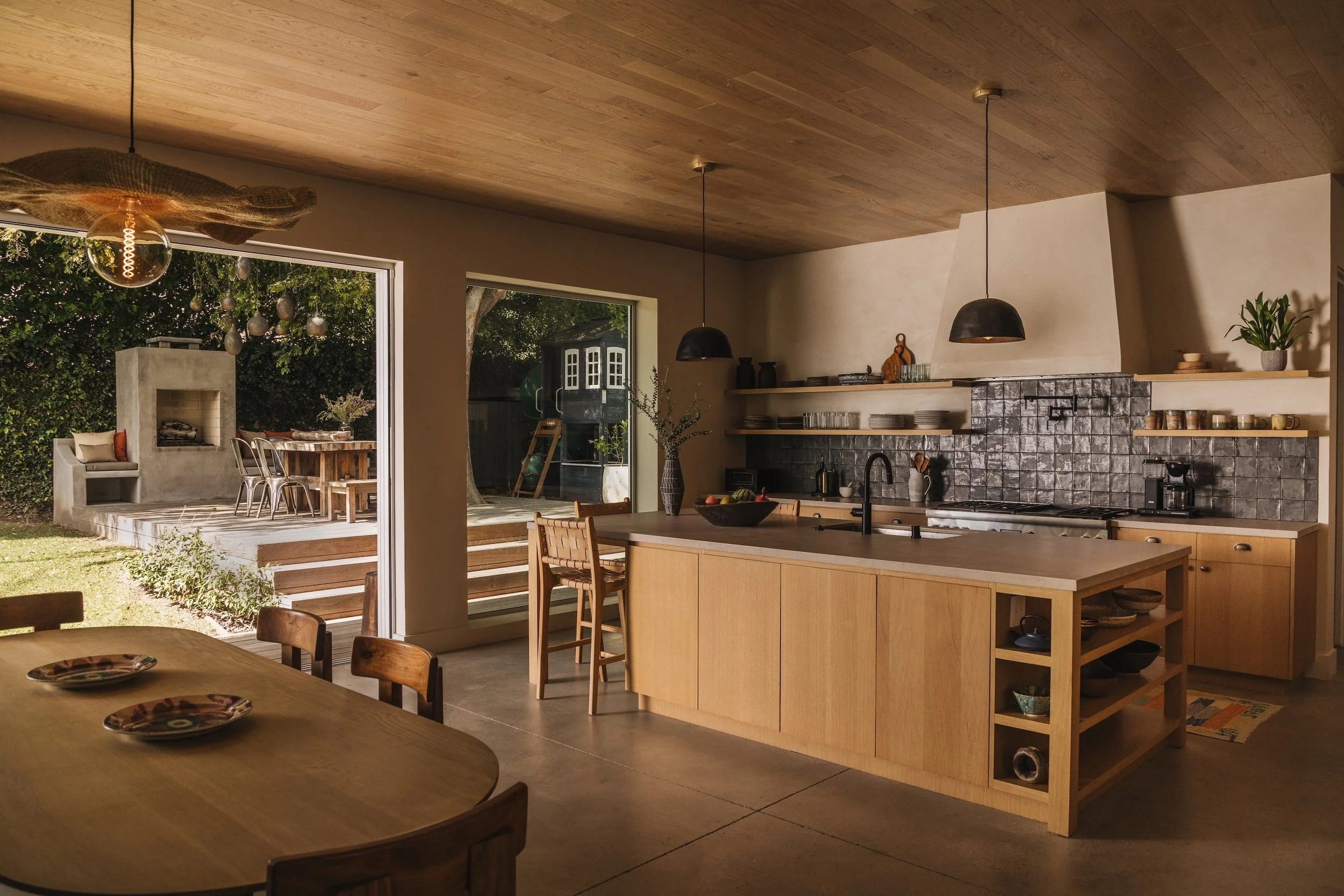
Wood kitchen cabinetry and open shelving in Space Camp's Mar Vista Modern home organizing project.
Walk through an ordinary day
A storage plan can look gorgeous and still be completely wrong for your morning.
Imagine making breakfast. Where do you reach for a mug? Where does the lunchbox come out, and where will it go when everyone gets home? When you unload the dishwasher, can the everyday dishes go away without a tour of the kitchen?
Now do the same thing with getting dressed, laundry and leaving the house. The things you use most should be easy to reach in the places where you use them. Backups and occasional-use items can live somewhere less convenient.
At our Mar Vista Modern project, the work connected spaces throughout the home, from the kitchen and pantry to the home office, nursery and playroom. That's how we like to think: the whole home has to make sense together.
Ask the other people who use the space, too. A partner, nanny or housekeeper may notice a daily frustration you don't. The system has a much better chance of working when everyone understands where things belong and can comfortably use it.
Decide what kind of fix the problem needs
Not every storage problem needs a renovation. Not every storage problem can be solved by adding a basket, either.
In Who What Wear's account of working with Julianna, the writer describes replacing an ill-fitting storage unit with shelves sized for the space. That's the sort of change we're looking for: solve the fit problem first, then organize what belongs there.
Sometimes editing is enough. Sometimes a divider makes a drawer work, or another shelf uses space that was sitting empty. Sometimes the shelf depth or the entire layout is the problem, and putting more organizing products into it won't change that.
This is where a site visit is useful. We can talk through different options and weigh the cost, the result you're hoping for and how long you plan to stay in the home.
If you're building, early planning gives you more choices. In our Culver City New Build, we worked with the designer and cabinetmaker before the home was complete, planning closets around the family's actual inventory and needs.
If you're renting, the answer may be portable shelving or flexible products instead. Our renter-friendly organizing ideas explore that approach. The right solution depends on your home, your belongings and your priorities.
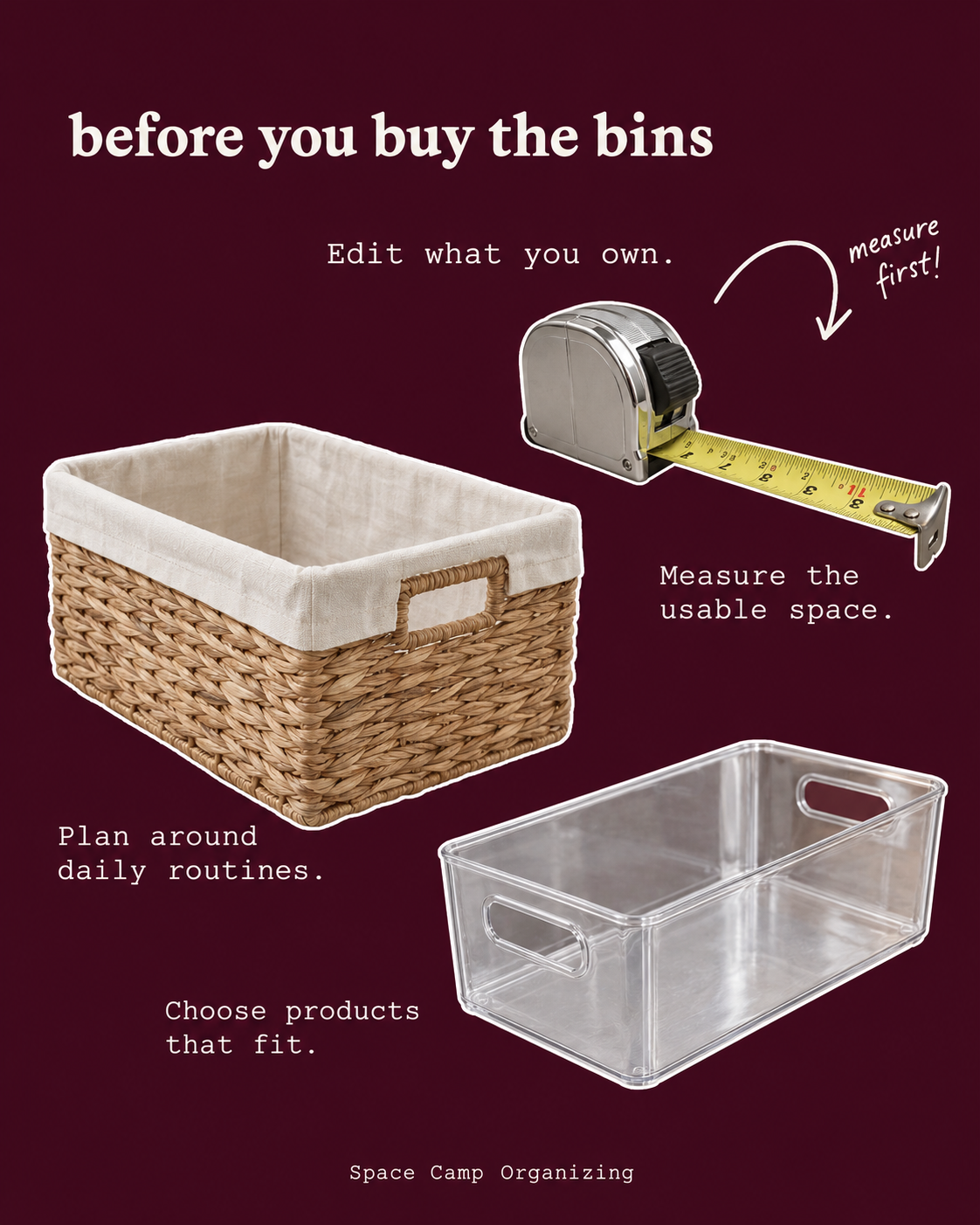
Buy for the plan, then leave a little room
Once you know what's staying, where it belongs and what the space can hold, shopping gets much more useful. You're choosing a product to solve a particular problem, rather than hoping a beautiful bin will tell you what to put in it.
It's advice Julianna also shared with Sunset in its organizing guide: sort and plan before shopping for containers. A product can be lovely and still be completely wrong for the space or the things you need it to hold.
We look at fit, materials, budget and how the product will be used. We also try to use good pieces you already own. During a Space Camp project, we source options around the plan, make adjustments as we work and return the products you don't keep.
Try to leave some breathing room when you put things away. A system that only works when every drawer is perfectly folded and absolutely nothing new comes home is asking an awful lot of real life.
You want to be able to find what you need, use it and put it back without thinking too hard. That's the point of all the measuring and planning.
For help with move-in organizing in Los Angeles, book a free consult with Space Camp. We'd love to help your new home make room for the life you're actually living.
Frequently Asked Questions
Which measurements matter when choosing drawer organizers?
Measure the drawer's usable inside width, depth and height, rather than the outside of the cabinet. Check for anything that reduces the space, and make sure the drawer can close with the organizer and its contents inside. Then compare those measurements with the products you're considering and the things they'll hold.
How do I decide which baskets and bins to bring to the new home?
Start with what each one holds and whether you still need that category. Keep useful pieces in good condition, then check their dimensions against the new shelves or cabinets. A basket that worked beautifully in one closet may need a different job in the next home. Reuse what fits the plan.
What if my new home has less built-in storage?
First, compare the available storage with what you actually plan to keep. Editing may help, or you may need to give some categories a different home. Portable shelving and freestanding storage can also be options. The right choice depends on your routines, budget and how long you expect to stay.
How can I tell whether a storage setup will be easy to maintain?
Walk through taking something out and putting it away. Can the people using the space reach what they need without moving several other things? Is there breathing room for everyday changes? If keeping it tidy requires perfect folding or constant rearranging, simplify the setup before buying more containers.